


In scenarios where heavy load conditions prevail, Cassandra notably outperforms PostgreSQL, offering an efficient solution for managing large volumes of data. This performance edge is primarily due to Cassandra's robust data partitioning capabilities and its ability to maintain high uptime even under intense operational demands. Additionally, batch processing in Cassandra showcases remarkable efficiency, key for handling bulk data operations swiftly. While PostgreSQL shines in environments requiring complex relational queries for smaller datasets, it encounters limitations as the scale tips towards big data territory. Optimal database choice pivots on specific workload requirements: from consistency levels aiming at the perfect balance between speed and precision, through sustaining peak performance under extreme conditions, to scalability essential for exponential growth scenarios discussed earlier (from 3TB upwards). Now let us explore how data partitioning strengths with Cassandra play a crucial role in these dynamics.

Data Partitioning Strengths with Cassandra
Cassandra shines in scenarios where data needs to be globally distributed, ensuring 100% availability with eventual consistency. It's ideal for applications requiring fast key/value access and supports unique data access patterns well suited for high write, low read environments. This makes Cassandra a strong fit for handling vast amounts of calendar or event-based information which might involve tens of thousands of records per user. For projects poised for rapid growth - jumping from terabytes to potentially exabytes - Cassandra’s scale-out design comes into play effectively. Unlike PostgreSQL, which excels at managing smaller relational databases up to a few terabytes efficiently but may not be the best choice as a Big Data store due its scaling limitations and cost implications as volume grows. In contrast to systems that rely heavily on in-memory processing like MemSQL, expensive and geared towards analytics-driven datasets Cassandra offers an efficient way to handle large-scale storage without unnecessary costs through memtables transitioning into disk-based SSTables. This approach prevents infrastructure challenges from overshadowing product development goals especially during early stages by avoiding complex manual operations required by other solutions such as Citus or extensive reliance on memory resources seen with columnstore technologies. Organizations aiming to stretch their technological capabilities find Cassandra's partitioning strengths valuable. It's particularly useful for 'high write' situations like storing massive volumes of log data.
Why Uptime Matters for Large Scale Operations
Uptime in large scale operations is critical for maintaining continuous service and ensuring that business processes run smoothly. In contexts like Cassandra’s handling of virtual nodes, uptime becomes a non-negotiable aspect due to the intrinsic complexities involved in managing data distribution and availability across clusters. For instance, with Cassandra introducing 256 virtual nodes per node to solve scalability challenges, the operational intricacies increased significantly. This change aimed at diluting token range size variance might have eased scalability but also introduced performance bottlenecks and potential points of failure. Consider scenarios where multiple nodes go down; this directly impacts LOCAL_QUORUM requests' success rates because it's more likely for these requests to fail when essential token ranges become unavailable due to node failures. Such downtimes can lead businesses dealing with high volumes of transactions daily into chaos, interrupting user experience, causing transaction delays or losses, which ultimately translates into significant revenue loss. Each table within Cassandra caters to one application query pattern and cannot be easily modified. An uninterrupted operation environment ensures balanced data across partitions, avoiding performance issues from uneven distributions. Thus uptime isn't merely about keeping systems online but ensuring they operate efficiently under heavy loads while preventing any form disruptions that could compromise system reliability or degrade user experiences crucially important larger-scale settings.
Batch Processing Efficiency in Cassandra
Cassandra's approach to batch processing efficiency is a game-changer for high-load conditions. Known for its schema flexibility, Cassandra allows businesses to add new columns without disrupting existing data operations, an advantage in rapidly changing environments. Its distributed design means no single node bottlenecks or points of failure, significantly reducing downtime risks during heavy loads. The system shines with write optimization by handling vast amounts of quickly generated data, a common scenario in IoT and event logging systems, with ease. The absence of "leader" nodes avoids operational complexity and enhances resilience against failures, ensuring steady performance under pressure. Moreover, Cassandra's sophisticated partitioning scheme distributes data across clusters evenly based on partition keys. This ensures balanced load distribution and optimal access speeds, critical aspects when dealing with petabytes of information scattered over numerous servers. In practice, this setup enables seamless scalability by just adding more nodes without any service interruption; the database keeps performing robustly as if nothing changed. Traditional databases struggle under similar circumstances due to centralized architectures needing complex adjustments for scaling. Cassandra excels with fault tolerance, decentralized communication, and swift write-read capabilities amidst constant influxes.

Consistency Levels: Balancing Speed and Accuracy
In the conversation about consistency levels, a crucial balance between speed and accuracy emerges. PostgreSQL opts for strong consistency, ensuring every transaction adheres to set integrity constraints before finalizing changes. This method guarantees data remains accurate and reliable across operations, supporting applications that demand rigorous query execution with complex relationships. On the flip side, Cassandra prioritizes eventual consistency. It means updates might spread out asynchronously causing temporary inconsistencies which correct themselves over time. Such an arrangement is pivotal for environments where write operation efficiency trumps immediate data uniformity. This distinction plays a significant role in deciding between PostgreSQL and Cassandra based on specific application needs, whether it's intricate query handling or managing high-throughput scenarios effectively.
PostgreSQL Limitations under Extreme Conditions
PostgreSQL, while robust and compliant with ACID standards, faces limitations under extreme conditions. Its architecture primarily caters to relational DBMS models, limiting its flexibility in distributed environments compared to Cassandra's wide column store approach based on BigTable and DynamoDB concepts. PostgreSQL operates within a defined environment supporting various operating systems but doesn't inherently match the scalability offered by NoSQL databases like Cassandra. In high-demand scenarios where horizontal scaling becomes crucial for performance maintenance, PostgreSQL struggles due to its reliance on traditional vertical scaling methods. While it offers server-side scripting through user-defined functions enhancing customization capabilities, this feature might not sufficiently address the need for rapid data processing across multiple nodes typically required in large-scale applications. Moreover, despite advancements making PostgreSQL more compatible with Kubernetes, improving aspects such as automatic failover and scalability, running stateful workloads effectively remains challenging owing to inherent differences between container orchestration needs and database management prerequisites. Postgres has evolved considerably over time. It may not be as effective under strenuous demands involving massive datasets or extraordinary fault tolerance.
Choosing the Right Tool for Big Data
Choosing the right tool for big data hinges on understanding your specific needs and the distinct capabilities of Cassandra versus PostgreSQL. If high availability is paramount, consider that while PostgreSQL boasts 99.9% availability, this figure excludes planned downtimes which occur monthly or bi-monthly. In contrast, Cassandra's architecture ensures continuous uptime by allowing node additions to clusters without shutdowns, crucial for businesses requiring constant access to their data. For those dealing with vast volumes of information across multiple locations, Cassandra excels due to its ability to manage significant data loads and user traffic seamlessly, even in globally distributed setups. It suits applications where writes outnumber reads significantly and can replicate data efficiently across various environments. On the other hand, PostgreSQL shines in scenarios not well-suited to massive parallel processing or heavy NoSQL workloads but finds extensive use in enterprise-level tasks such as operational decision-making (ODS), transactional operations (OTP), and complex analysis (OLAP). Its extensibility through numerous available extensions makes it adaptable for a wide range of applications. However, challenges exist with both technologies: transitioning from SQL expertise to mastering NoSQL concepts can be demanding when adopting Cassandra; similarly navigating limitless customization options alongside optimization requirements poses hurdles within PostgreSQL environments. Therefore selecting between them requires balancing scalability expectations against existing technical proficiencies while considering each technology’s unique advantages.
Benchmarking NoSQL and SQL Databases
Benchmarking NoSQL and SQL databases highlights how these systems handle data under various conditions. When comparing their performance, it's clear that network latency plays a significant role in the speed of processing transactions. In this context, batching changes on the client side before committing them to the server is a critical strategy for both types of databases. This approach ensures data persistence only after successful commits, mirroring transaction handling in relational databases. In particular scenarios like deferred log flushes seen with some NoSQL implementations, there’s an additional delay, though usually just a couple of seconds, before changes are fully written to the file system. Despite these delays demanding high throughput from databases like HBase, such operational nuances underscore the necessity for understanding specific database behaviors during benchmark tests. The perception that Oracle stands as the most potent solution often ignores its complexities and high operating costs. Each database technology brings unique benefits and challenges; what might initially seem as an attractive option could later lead to regret, a common tale told through "Why we moved away from xyz database" blog posts. Thus, selecting between NoSQL and SQL depends heavily on identifying appropriate use cases rather than following trends blindly. The intention behind detailed benchmark analyses isn't trivial but aimed at guiding businesses towards making informed decisions about which database technologies align best with their requirements.
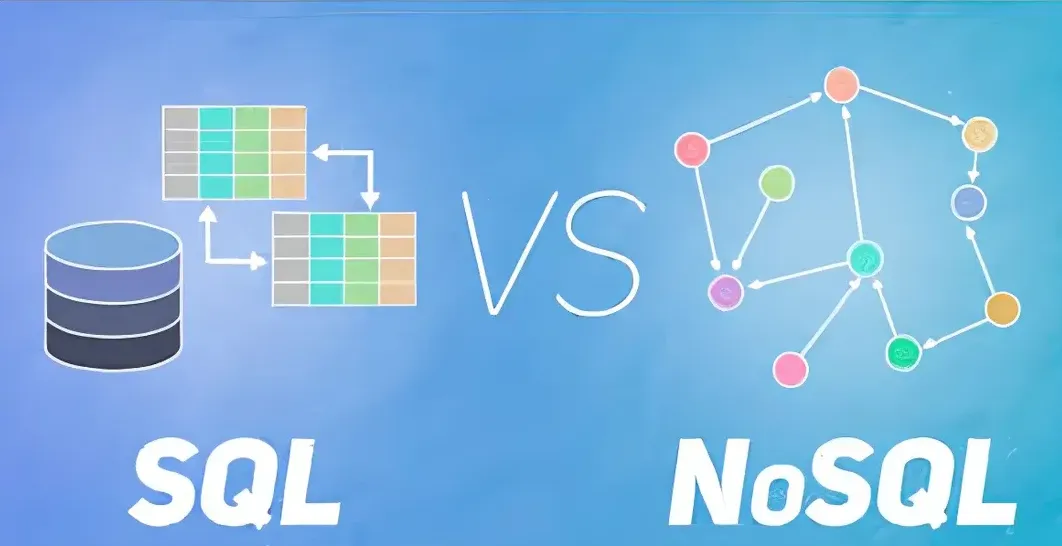
Workload Management in High Traffic Scenarios
In high traffic scenarios, workload management becomes crucial for maintaining system performance and reliability. Cassandra, a NoSQL database, shines in these conditions due to its distributed nature which allows it to handle large volumes of data across multiple servers without compromising on speed or availability. This contrasts with PostgreSQL, a relational database that struggles under significant load as it relies on a single server setup. For businesses dealing with heavy user traffic or big data applications, this difference is critical. Cassandra's ability to replicate data across nodes ensures no single point of failure and provides continuous accessibility even during peak times. Consequently, companies favor Cassandra over PostgreSQL for managing workloads in high-traffic environments.
Cassandra's Superior Scalability
Cassandra stands out for its superior scalability in managing large data volumes across multiple nodes effectively. This capability stems from automatic sharding, which divides the database into manageable parts that are distributed among several servers or "nodes". Unlike traditional SQL databases where a bottleneck can occur if data exceeds the max write throughput of a single node, Cassandra mitigates this issue by spreading loads evenly. However, it's worth noting that during failover processes, some recent commits may not immediately appear at the slave replica due to shared nothing storage architectures. The essence behind NoSQL databases like Cassandra prioritizing high performance through distribution lies in their approach towards handling queries and structuring data differently than SQL systems. Denormalization in NoSQL ensures quick access times by replicating data across nodes for specific queries. This compromises features like ACID transactions and consistent global secondary indexes for better reading efficiency. Cassandra's linear write scaling advantage enables massive growth without compromising fault tolerance. Automated rebalancing/sharding mechanisms handle vast datasets seamlessly compared to manual failovers in SQL environments.
PostgreSQL vs Cassandra Performance Metrics
Cassandra outperforms PostgreSQL under heavy load conditions by managing millions of concurrent users and operations per second. It excels in environments that demand high write volumes, like online gaming or social media platforms, without compromising on performance. By adding nodes to a cluster, Cassandra scales capacity seamlessly while ensuring continuous availability and uptime across multiple data centers. This feature is crucial for applications requiring low-latency experiences globally. PostgreSQL shines in scenarios where complex queries are common; it's highly customizable with extensive support for various programming languages through extensions. Ideal use cases include enterprise data warehousing or IoT tracking systems which rely heavily on querying capabilities. While both databases offer unique advantages based on the application needs, Cassandra being better suited for large-scale writing tasks and Postgres optimized for complex query handling, their performances delineate clearly defined roles within IT infrastructures depending on workload requirements.
Heavy Load Handling Capabilities
In an impressive project with CPDP, East Agile leveraged PostgreSQL to handle a massive database of police misconduct allegations. The team's skill in optimizing queries led to a stunning tenfold increase in index time on ElasticSearch. This didn't compromise responsiveness or functionality, proving PostgreSQL can efficiently manage heavy loads when properly fine-tuned. PostgreSQL stands out for its data constraint and validation capabilities which ensure the meaningfulness of JSON documents. These features are critical for maintaining data integrity under high demand conditions. Moreover, tools like ClusterControl aid significantly by offering management, monitoring, and scaling solutions tailored for both SQL and NoSQL databases under stressful workloads. PgBackRest further exemplifies proficient backend support with its backup and restore system designed specifically for hefty datasets scalability challenges. The variety among database systems necessitates careful consideration based on specific business models and future needs, especially when anticipating scale expansions typical of heavy load scenarios.
Advantages of Distributed Database Systems

Distributed database systems, particularly those running on low-power Single-Board Computers (SBCs) like Raspberry Pi clusters, offer significant benefits in managing Big Data challenges. These systems leverage the Docker Swarm orchestration tool for efficient service deployment and load balancing across nodes. This setup proves cost-effective while aligning with cloud serving objectives such as scalability, flexibility in resource use, and ensuring data is always accessible. A notable advantage of these databases lies in their ability to balance performance with replication needs, a crucial factor that ensures continuous availability and partition tolerance despite hardware limitations or failures. For instance, Cassandra demonstrates an effective management of consistency levels specified by clients without severely compromising system speed. The adoption of SBC clusters also addresses larger infrastructural issues tied to rapid digital data growth, minimizing space occupancy and energy consumption notably more than traditional data centers can achieve. Through compactness and lower power requirements accompanied by substantial computing capabilities when clustered, SBC-based distributed databases present a scalable solution readily adaptable to rising volumes of real-time processing demands anticipated globally. This approach not only meets the immediate need for handling large datasets but does so through an economically viable model that reduces both operational costs and ecological impact, an essential consideration given increasing concerns around sustainability within technology infrastructures. Levitation's analysis finds that under heavy load conditions, Cassandra significantly outperforms PostgreSQL. This is due to Cassandra's distributed architecture, which efficiently handles large volumes of data across many servers without sacrificing performance. While PostgreSQL excels in transactional consistency and complex queries, its single-server setup struggles with scalability when faced with intense workloads. Organizations prioritizing high availability and fault tolerance in high-traffic environments might favor Cassandra’s strengths. Ultimately, choosing between them depends on specific project requirements and scalability needs.