

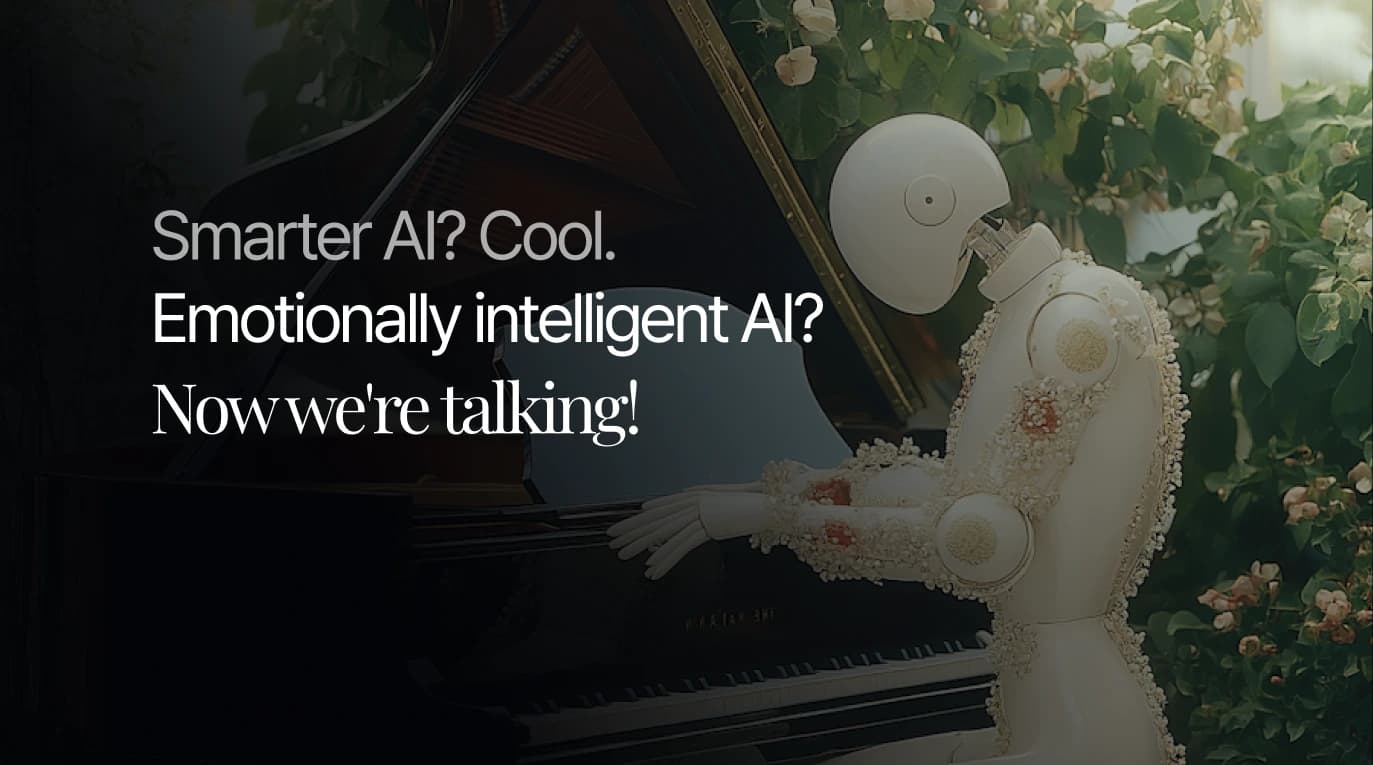
Imagine if your phone didn’t just answer your random 2 AM questions but also knew when you were stressed and hit you with the perfect pep talk. Or if customer service chatbots finally stopped acting like emotionless robots and actually understood your frustration-maybe even apologized before making you restart your router for the third time.
Welcome to the next big thing in machine learning: emotional intelligence. It’s not just about making AI smarter; it’s about making AI more human (minus the existential crises). By developing EI skills, machines could improve relationship management, ace an emotional intelligence test, and maybe-just maybe-stop giving robotic, one-size-fits-all responses.
Think about the impact. AI-powered stress management tools could help you stay sane in chaotic work environments. Chatbots with social awareness might actually get that you’re upset and not just “experiencing technical difficulties.” Machines with emotional competencies could revolutionize everything from mental health support to customer experience.
The future isn’t about replacing human connection-it’s about enhancing it. And if AI can develop emotional literacy, who knows? Maybe one day, your smart assistant will finally understand why you’re rage-quitting emails on a Monday morning.
What Is Emotional Intelligence, Anyway?
Alright, let’s break it down. Emotional intelligence is basically the superpower that helps humans not completely ruin social interactions. It’s what lets you read the emotions of others, keep your cool when your WiFi dies during a meeting, and resist the urge to throw your laptop out the window. It’s a mix of emotional awareness, empathy, and good old-fashioned people skills.
Now, AI has been busy doing the usual-predicting the weather, analyzing stock trends, and somehow still making terrible autocorrect suggestions. But what if it could go beyond just crunching numbers? What if it had emotional abilities? Imagine AI that actually understands frustration instead of replying with, “I’m sorry, I didn’t catch that.”
Here’s where emotional intelligence skills come into play. If being emotionally savvy is a key skill for great leaders, imagine what it could do for machines. Smarter AI in the workplace could mean virtual assistants that actually help instead of sending you on a wild goose chase through your inbox. As Daniel Goleman, the guy who made emotional quotient a thing, put it: “Emotional intelligence is the sine qua non of leadership.” And if it’s critical for humans, why not upgrade our machines with a little emotional wisdom too?
The Rise of Emotion-Sensing AI
AI is already pretty impressive. It can recognize faces, translate languages, and even destroy your self-esteem by beating you at chess in under 30 seconds. But when it comes to emotional intelligence? That’s where things get tricky. Human emotions are complicated, unpredictable, and, let’s be honest, sometimes completely illogical. (Looking at you, “crying over a commercial” moments.)
But scientists and tech companies are determined to make AI more emotionally aware. They’re working on systems that can detect emotional cues from your voice, facial expressions, and even the words you use-basically, giving AI some much-needed social skills so it stops sounding like a robot from the early 2000s.
How Does It Work?
Think of it like an emotional quotient inventory for machines. AI uses a mix of tools:
Cameras analyze whether you’re smiling or giving your best “Monday morning face.”
Microphones pick up changes in your voice, like when you’re stressed (or just trying to order coffee before 8 AM).
Text analysis scans your messages to detect emotional undertones-so AI knows when you’re actually fine versus “fine.”
All of this falls under different models of emotional AI, like the ability model (how well AI can process emotions) and the trait model (AI’s attempt at understanding personality traits). Put it all together, and we get AI with interpersonal skills-or at least an AI that won’t completely misread your tone. It’s still a work in progress, but with constant assessment and growing emotional knowledge, AI is getting better at reading emotions. Maybe one day, it’ll even know when NOT to suggest “Have you tried turning it off and on again?”
Why Emotional Intelligence Matters for Machines
Why teach machines emotional intelligence? Simple-because humans are emotional beings. We don’t just want cold, robotic responses; we want tech that gets us. A therapist who doesn’t care about your feelings? Useless. A customer service rep who ignores your frustration? Instant resentment. Machines with EQ or EI could bridge that gap, making interactions feel less like talking to a toaster and more like real conversations.
The Human-Machine Connection
When AI understands emotions, it can respond in ways that actually feel human. Picture this: You’re having a meltdown over a lost file, and instead of a generic “How can I help?” your virtual assistant says, “Breathe. I’ve got this.” That’s not just smart-it’s confidence-boosting.
Research shows that emotional AI could make technology feel like a real partner, not just another screen to yell at. And if machines learn mindfulness along the way, maybe-just maybe-they’ll stop suggesting “Have you tried restarting?” as their top troubleshooting tip.
Transforming Therapy with Emotional AI
Mental health is a global crisis, and let’s be real-there just aren’t enough therapists to go around. So, can AI step in? Short answer: kinda. Long answer: it depends on how well we can teach it emotional intelligence without making it sound like an automated fortune cookie.
AI as a Listening Ear
Imagine an AI therapist that’s always available, never judges, and doesn’t charge $200 an hour. You vent, and instead of generic advice, it actually gets you. It picks up on sadness or anxiety with emotional perception and responds with an intelligent response: “Sounds like a tough day. Want to talk it out?”
Early versions of AI therapy exist, but with better trait EI, they could go from “kind of helpful” to “actually comforting.” MIT professor Sherry Turkle once said, “Technology can be a mirror for our emotions.” If that’s true, emotional AI could help us see ourselves more clearly-without the awkward small talk.
Limits and Possibilities
Will AI replace human therapists? Nope. It still lacks human cognitive abilities (and probably won’t remind you to drink water when you’re sad). But as a first step, AI therapy could help people who hesitate to seek help.
For businesses, AI-driven emotional support could even boost job satisfaction, creating a workplace where intelligent people feel heard. And who knows? If AI gets good enough at understanding our strengths and weaknesses, maybe one day, it’ll finally figure out what makes us truly happy. (Hint: It’s probably not another “We hope this email finds you well” message.)
Revolutionizing Customer Service
Ah, customer service-the land of hold music, robotic responses, and the deep existential question: Why do I even bother calling? But what if AI could actually understand you instead of making you scream into the void? Enter emotional intelligence-the secret ingredient that could turn customer support from a nightmare into something that doesn’t ruin your day.
From Frustration to Understanding
Picture this: You’re already fuming, and instead of a soulless “Please hold,” the chatbot actually gets it. It picks up on your anger, acknowledges the issue, and says, “I hear you. Let’s fix this-fast.” Suddenly, you’re not battling a machine; you’re getting actual success.
Companies are already playing around with this. AI that senses emotions could be the difference between a service that makes you want to throw your phone and one that leaves you with a weird sense of happiness (or at least, mild satisfaction). Because let’s be real ,great customer service isn’t just about efficiency. It’s about feeling understood.
Real-World Examples
Some call centers are testing AI that listens for frustration and nudges human agents to adjust their approach. If a customer is losing it, the system flags it, helping agents act like effective leaders instead of script-reading robots.
As more businesses realize the importance of high-EI customer interactions, this could reshape the entire experience. After all, teamwork between humans and AI might just be one of those crucial skills that separates good service from “I’m never shopping here again.”
Could Emotional AI Change Relationships?
Alright, let’s get real-can emotional intelligence in AI actually change how we connect with people? Could machines go from answering dumb questions (yes, your Wi-Fi is still down) to understanding our behavior and emotions?
A Companion That Cares
Imagine an AI that actually pays attention to you (unlike some people, cough). You’re unusually quiet, and it gently nudges you: “Tough day? Want to talk?” It’s not just another chatbot; it’s a digital support system. For those who feel isolated ,like seniors or busy professionals juggling technical skills and life-it could offer a bit of comfort. Not a total replacement for human connection, but hey, it’s a start.
The Flip Side
Of course, there’s always a catch. If we get too cozy with AI, will we start dodging real human interactions? Machines don’t judge, don’t interrupt, and definitely don’t roll their eyes at your terrible jokes (unlike your best friend). But real relationships thrive on constructive feedback, growth, and, yes, even a little conflict.
Like any good organization, balance is key. AI can offer motivation, but relying too much on it might leave our social skills in the dust. At the end of the day, success in life isn’t about perfect AI conversations-it’s about staying connected to real people, quirks and all.
The Tech Behind Emotional AI
Teaching machines emotional intelligence isn’t as easy as telling them to “just be more understanding” (if only that worked on people). It takes some serious tech magic, a mountain of data, and a whole lot of trial and error.
Machine Learning Meets Emotions
AI learns emotions the same way we learn that eating ice cream too fast leads to brain freeze-by recognizing patterns. Developers feed it endless videos, voice recordings, and text messages, training it to connect a furrowed brow with stress or a shaky voice with nerves. Over time, the AI starts to pick up on these emotional breadcrumbs and, ideally, stops making awkward mistakes (unlike that one friend who never gets sarcasm).
The Tricky Part
Here’s where things get messy. Emotions aren’t universal-what’s a friendly grin in one culture might be an “I’m uncomfortable” signal in another. Plus, humans are experts at faking emotions (high EI move, honestly). Teaching AI to navigate these subtleties without making embarrassing blunders? That’s still a work in progress.
Privacy and Ethical Questions
Here’s where things get real complicated. For AI to flex its emotional intelligence, it needs to watch, listen, and analyze you ,basically, be all up in your business. And that raises some serious “wait, who else is seeing this?” concerns.
Who’s Got Eyes on You?
If your phone can tell you’re feeling down, who else knows? Advertisers? Your boss? The government? Picture this: you’re having a bad day, and suddenly your feed is flooded with ads for comfort food and self-help books (thanks for the reminder, AI). The worst-case scenario? Mood-tracking tech being used for manipulation, not support.
Keeping It Fair (And Not Creepy)
Then there’s bias. If AI is mostly trained on certain faces or voices, it could misread others entirely. A system built on Western expressions might totally misinterpret emotions from other cultures—because, surprise, not everyone frowns the same way. Making emotional AI accurate, fair, and not invasive is non-negotiable.
Emotional AI in Everyday Life
This isn’t sci-fi-it’s happening now.
Smart Homes and Cars
Your smart speaker might soon dim the lights when it senses you’re stressed. Cars could detect road rage and automatically switch to soothing jazz (whether you like it or not). It’s all about making tech a little less robotic and a little more... human-ish.
Schools and Workplaces
In classrooms, AI could flag when a student looks lost and give the teacher a heads-up. At work, it might nudge your boss to check in before you hit full burnout mode (or at least before you start rage-quitting in your head). Done right, emotional intelligence in AI could make work and learning way less soul-crushing.
The Future of Emotional AI
So, where’s this emotional intelligence rollercoaster headed? Buckle up-it’s wild, exciting, and a little terrifying.
A More Empathetic AI (Or So We Hope)
If machines can read the room (literally), they might help us be better humans. Think therapists getting AI-backed insights, friends getting nudges when you’re feeling low, or workplaces actually caring about burnout (we know, sounds fake, but let’s dream). The goal? AI that amplifies human kindness, not replaces it. As AI expert Rana el Kaliouby puts it, “Emotion AI isn’t about replacing humans-it’s about augmenting our ability to connect.”
But Let’s Not Get Too Carried Away
Machines reading emotions? Cool. Machines being emotions? Yikes. AI should assist, not handle all the heavy lifting of human connection. Otherwise, we risk outsourcing empathy the same way we outsourced remembering phone numbers.
Key Takeaways
Emotional intelligence in AI is about making machines understand human emotions, giving tech a more human-like touch. If used right, it could transform therapy by detecting distress early, making customer service feel less robotic, and even helping with emotional intelligence training in workplaces. AI companions might make loneliness a little less lonely, but nothing beats real human bonds. The real challenge? Keeping it ethical, unbiased, and not creepy. Emotional intelligence measures will be key in ensuring AI understands feelings without invading privacy. AI that reads emotions is already here, from smart homes adjusting to moods to workplaces monitoring burnout. But the real test is whether we use this tech to enhance connections-or just automate them.
So, What’s Next?
The big question isn’t whether emotional AI will change our world-it already is. The real question is: Will we use it to connect better, or just automate our humanity?
Because in the words of Daniel Goleman, the godfather of emotional intelligence:
"IQ gets you hired, but EQ gets you promoted."
So, let’s make sure AI is lifting us up-not replacing us.