

.webp&w=2048&q=75)
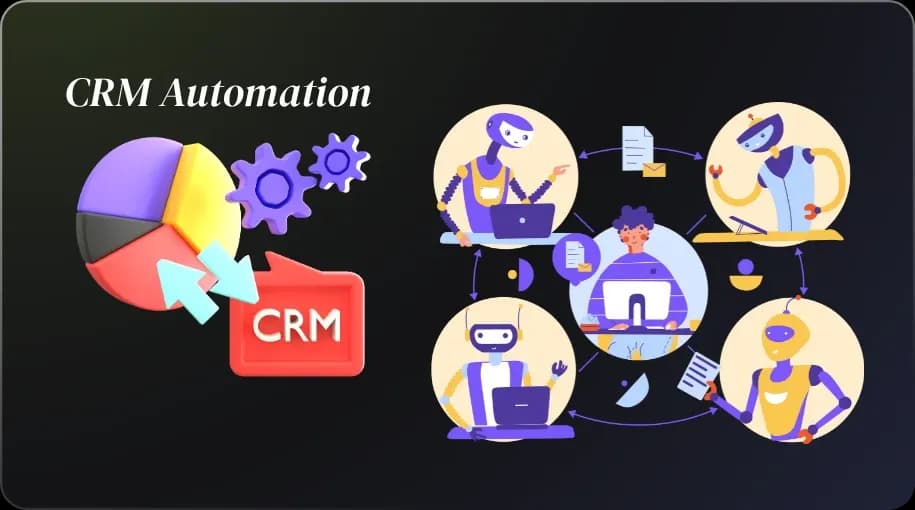
CRM automation stands as a beacon of efficiency in the bustling marketplace. By leveraging technology to streamline routine tasks, businesses witness significant savings in time and resources, while simultaneously elevating their customer experience. From automating data entry to orchestrating intricate email campaigns, CRM tools empower companies to maintain meticulous records and interactions with customers under one unified system.
Popular systems come packed with features designed for optimal data management and process simplification that cater directly to boosting lead conversion and fostering client relations. The essence of CRM automation lies not just in its ability to conserve valuable hours but also in enhancing data accuracy, improving analytical capabilities, optimizing team collaboration, and ultimately driving growth by refining customer engagements. Now let's look into "What Is CRM Automation and Why It Matters.
.webp&w=1920&q=75)
What Is CRM Automation and Why It Matters
CRM automation, simply put, is a game-changer for managing customer relationships. It's all about using technology to handle the repetitive tasks that can overwhelm your team. Imagine not having to manually enter data or send follow-up emails because your system does it all for you.
That's CRM automation at its core; maintaining detailed records of customer interactions, processing payments, and automating email campaigns from one platform. This not just saves heaps of time but also slashes costs significantly. By embarking on this route, companies witness improved accuracy in their database and a seamless connection across sales, marketing, and service teams due to centralized information accessibilities.
This cohesion fosters an unmatched personalized experience for customers through tailored communication and offers keyed precisely to their preferences, everything backed by laser-sharp analytics drawing insights directly from automated processes within the CRM system. Capturing leads with pinpoint precision and sending timely welcome emails make every interaction count. Operational excellence ensures teams stay aligned and strategies remain sharp.
Plus let's not forget: choosing rightly matters greatly when dipping toes into CRM systems, the right tool transforms potential headaches into avenues bursting with growth opportunities.
.webp&w=1920&q=75)
Top 5 Time-Saving Benefits of CRM Automation
CRM automation isn't just a tool; it's your sales team's best ally. It transforms chaotic workflows into streamlined processes, ensuring no lead is left behind and every opportunity is maximized. Here are the top 3 time-saving benefits that stand out:
- Real-time Sales Activity Tracking: Your CRM does the heavy lifting by keeping tabs on all activities of your sales team in real-time. This means you can instantly see how many emails, calls, and meetings each rep has scheduled without manually sifting through schedules or reports.
- Enhanced Performance Analytics: With CRM automation software at your fingertips, accessing detailed performance metrics becomes a breeze. This allows for quick identification of trends within your team's efforts - from deals closed to revenue generated.
- Simplified Reporting Process: Gone are the days spent compiling complex sales reports manually. A modern CRM system enables you to generate comprehensive reports effortlessly, evaluating everything from open opportunities to top performers in seconds.
How CRM Automation Boosts Lead Conversion
CRM automation significantly elevates lead conversion rates by streamlining processes and nurturing leads efficiently. Consider this: if your goal is to boost sales by acquiring 10 more customers each month, you need to understand that with a 4 percent conversion rate from qualified leads to sales, it necessitates generating an additional 250 qualified leads monthly. This challenge can be effectively tackled through CRM automation tools like email automations or drip campaigns targeting cold leads.
Interestingly, businesses have progressively allocated more budget toward marketing automation due to its expanded toolset offering more sophisticated solutions for achieving such targets. Incorporating various strategies, such as crafting follow-up workflows for intrigued website visitors or venturing into new marketing channels, becomes crucial in amplifying your outreach efforts. It's about picking the right set of tools aligned with your business objectives; after all, investment in CRM automation transcends mere expenditure by driving substantial ROI improvements through enhanced efficiency and revenue generation capabilities.
Automated sequences can convert dormant prospects into profitable customer relationships. Intelligent automations conserve time and scale profitability in lead management.
Real-World Use Cases of CRM Automation
- Streamlining Contact Management: CRM automation turns the chore of maintaining a detailed, up-to-date contact database into a breeze. As soon as new information comes in or a lead progresses through the sales pipeline, their profile is automatically updated. This means no more sifting through emails at 10 p.m., trying to remember if you added that last conversation note.
- Enhancing Document Workflow Efficiency: The back and forth involved with quotes, contracts, and invoices can be staggering. CRM automation simplifies this by managing how documents are shared, accessed, and signed off on virtually eliminating manual tracking errors or lost files, think fewer "Did I send that?" moments.
- Improving Customer Service Response Times: Automating customer service tasks like ticket routing ensures inquiries don't get stuck in limbo waiting for manual assignment, because let's face it: nothing tests patience quite like slow response times when you need support NOW! AI-driven chatbots also step in during peak times ensuring continuous engagement without burning out your team.
.webp&w=1920&q=75)
CRM Automation vs Traditional CRM: A Brutal Comparison
Before the rise of CRM automation, traditional CRMs played a critical role in managing customer relationships. Yet, they often fell short when it came to efficiency and personalization.
- Traditional CRMs were primarily focused on storing customer contact information and managing communications. They helped to an extent but required manual input for every single detail, from lead status updates to scheduling demos. This process was not only time-consuming but also prone to errors due to human involvement.
- CRM automation, on the other hand, has revolutionized how businesses manage their customer interactions across the entire lifecycle. Features like automated email marketing templates and personalized outreach based on customer behavior streamline operations significantly. Monday.com illustrates this evolution by allowing teams full transparency over contacts, enabling quick access to essential details such as new versus qualified leads or lead status without sifting through endless data manually.
- The financial implications are stark; research indicates that implementing CRM solutions can result in an ROI of $8.71 for every dollar spent while boosting sales revenue by up 29% collectively and individual salesperson revenue by up 41%. Such figures underscore not merely a shift towards greater efficiency but also enhanced profitability facilitated largely through features like marketing automation which personalizes the customer experience at scale.
CRM automation doesn't just save you time, it transforms your approach toward handling leads with precision while ensuring your sanity remains intact amid burgeoning business demands
Task Automation Frees Up Valuable Time
Task automation within a CRM system frees up valuable time by handling repetitive tasks and ensuring accuracy in customer interactions. This not only saves hours of work but also significantly boosts team productivity and efficiency.
- Eliminates Repetitive Manual Work: Manual data entry is out; automated tracking is in. Instead of spending precious hours logging every email or call, let your CRM do it for you, accurately and instantly. Now, your team can dedicate their time to engaging customers and crafting strategies that win.
- Faster Lead Response Times: Time matters when dealing with new leads. With CRM automation, as soon as a lead pops up, the system takes over, assigning the lead promptly and sending out thank-you emails without missing a beat. It's about making every second count towards turning prospects into happy customers.
- Streamlined Workflow Processes: Imagine processes flowing smoothly like water down a stream, with no logjams along the way! That's what an automated workflow does: one task completes; another starts without someone having to push it forward manually, a seamless operation from start to finish.
Simplifying Project Coordination and Delivery
Simplifying project coordination and delivery with CRM automation transforms a once cumbersome process into streamlined efficiency. For sales teams, the ability to score and prioritize leads through automated lead scoring rules is invaluable. These customizable criteria ensure that high-potential leads are identified swiftly, creating opportunities for focused engagement.
Furthermore, by integrating various tools with your CRM, like marketing automation software or ERP, you establish an interconnected ecosystem where critical data flows seamlessly between platforms. This not only eradicates redundant data but also provides a unified view of each customer's journey across different touchpoints.With such integration, tracking tasks and managing projects becomes remarkably easier as all pertinent information resides in one place. Automated reporting mechanisms further enhance this environment by delivering real-time insights without manual effort, ensuring every team member stays informed on key performance indicators effortlessly.
Optimizing Document Handling and Distribution
- Streamlined Inventory Management: Efficient document handling is crucial for accurate inventory control. CRM automation tools like DocStar centralize your documents, allowing for real-time updates and access to inventory records. This ensures that stock levels are always accurate, reducing the risk of costly overstocking or stockouts.
- Enhanced Supplier Relations: Keeping track of numerous supplier contracts can be overwhelming without a unified system in place. With CRM process automation, all supplier-related documents are organized in one location, simplifying management tasks. This organization makes it easier to negotiate better terms and resolve issues swiftly.
- Accelerated Document Processing: Slow documentation processes no longer have to bottleneck your operations thanks to solutions provided by systems such as DocStar from [Company Name]. These platforms use AI and machine learning not only to speed up both inbound and outbound document handling but also automate routine tasks.This shift enables teams to dedicate more effort toward strategic projects that drive growth while maintaining compliance with regulatory requirements effortlessly.
Reducing Human Error Through Process Consistency
Reducing human error through process consistency in CRM automation is crucial for maintaining a company's reputation, financial stability, and legal compliance. Human errors can result from various factors such as lack of training or fatigue, with IBM reporting that 95% of cybersecurity incidents involve these mistakes. Manual data entry is notably prone to errors like transpositions or missed entries which sap the trust out of decision-making processes due to bad data.
The IBM report pinpoints the healthcare industry suffering over 250,000 deaths annually in the US alone due to medical mishaps caused by human fallibility. With CRM automation, we see a significant reduction in these manual entry mishaps because automated systems offer unparalleled accuracy and consistency across large datasets where risk of error is high. Automating CRM tasks minimizes risks and flags incorrect data, ensuring operations run on accurate information. This decreases long-term negative impacts like misinformed decisions or delayed product releases.
Employees spend about one-fourth of their workweek on redundant data entry tasks. Investing in CRM automation enhances operational efficiency and market competitiveness while reducing human error.
Choosing the Right CRM Automation Tool for Your Business
- Budget Consideration: When choosing the right CRM automation tool, first understand your budget constraints. CRM solutions can range from free to more than $1,000 monthly, making it crucial to know what you're able and willing to spend upfront. This step helps in immediately eliminating options that are beyond financial reach, streamlining the selection process.
- Feature Needs Assessment: After setting a budget, assess which features are essential for your business's unique needs. Whether it's sales management, marketing automation or customer support enhancements, determine which functionalities will most benefit your operations and team dynamics. Not all CRMs offer the same feature sets; prioritizing these requirements will further narrow down potential choices.
- Demo Sessions and Free Trials: Finally, seeing is believing when it comes to selecting a CRM software that fits like a glove with your workflow preferences and business goals, a vetted shortlist isn't enough until you've witnessed each option in action through demo sessions or better yet/free trials as well. Engaging members of different departments during this phase not only offers diverse perspectives But also ensures broader organizational alignment on The chosen solution Ultimately leading To A Consensus On the best-fit Platform.
Common Mistakes to Avoid When Implementing CRM Automation
When we talk about leveraging CRM automation, there are some slip-ups you'll want to steer clear of. Skipping out on a precise plan is one big misstep. You might want to automate everything at once, but it's crucial to prioritize.
Focus on time-consuming tasks like email campaigns, which tools from Townsquare Interactive can handle. Not dialing in on the true return on investment before jumping in headfirst.
It pays off more when you focus first on tasks bleeding your budget or missing opportunities rather than less impactful ones. Neglecting team training can also backfire spectacularly. Automation tools pack a punch efficiency-wise but without giving your marketing and sales teams proper training and keeping them informed about what each other is doing, even basic automations falter.
Adding just a single automation into the mix isn't going to cut it either if you're chasing significant ROI boosts, go for multiple strategic implementations instead for compound benefits over time using platforms that mesh well with existing systems. Choosing an integration-friendly CRM should always be top of mind. Mismatched software ends up costing more headaches and bills without adding value.
Is CRM Automation Right for You? A Quick Checklist
Is CRM Automation Right for You? A Quick Checklist
Deciding if CRM automation fits your needs shouldn't be a puzzle. First, assess how much time your sales team dedicates to data entry.
If they're spending around 17% of their day on it, like many do, CRM automation can reclaim valuable hours by automating these tasks. Consider if leads often slip through the cracks during hand-offs from marketing to sales. This gap signifies a need for integrating both CRM and marketing automation to ensure smooth transitions and follow-ups.
Moreover, examine whether reporting is dragging down efficiency within your teams. Implementing automated report generation could spare them hours each week otherwise lost in manual work, time that's better spent engaging with prospects or refining strategies. Also think about customer service, are queries being logged systematically into your system?
Automating this process ensures you never miss out on vital feedback or inquiries. Lastly, assess how well-aligned your sales and marketing efforts are without unified tools. Disjointed platforms may indicate a greater need for an integrated solution.
United Supermarkets' leap from mass communications to targeted loyalty programs via HubSpot showcases just how transformative such integration can be when correctly applied.
CRM automation, such as Levitation offers, streamlines complex processes. It saves time by managing tasks and data efficiently. By nurturing leads with precision, it boosts conversion rates.
Most importantly, CRM automation brings peace of mind. You know every lead receives attention without manual oversight from you or your team. With Levitation's innovative tools at work, growing your business becomes less overwhelming and more enjoyable.
This smart approach lets professionals focus on strategy instead of drowning in details, a clear path to success in the fast-paced market.

-1.webp&w=2048&q=75)