

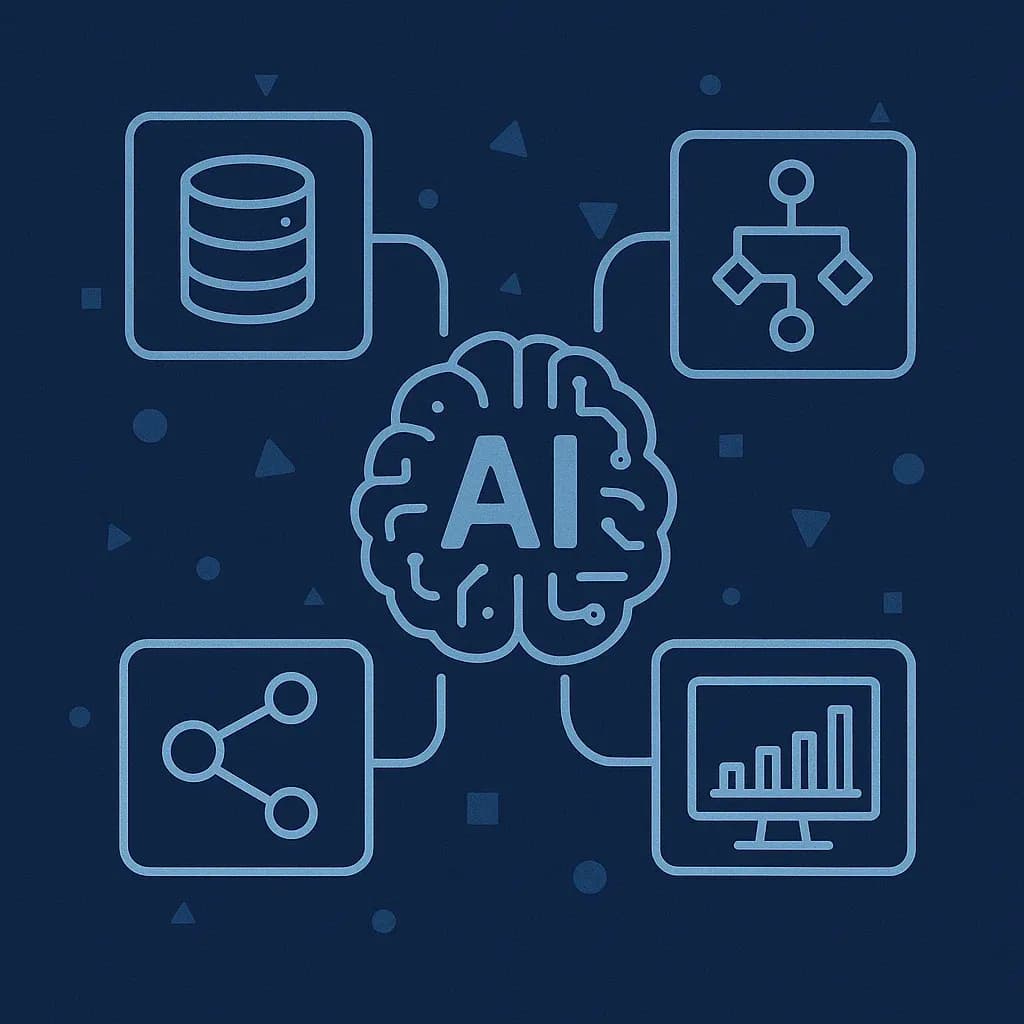
The fintech industry is undergoing a seismic shift, driven by artificial intelligence(AI) that’s reshaping how financial institutions operate, innovate, and secure their systems. Choosing the right Fintech AI framework is critical for businesses aiming to stay competitive. Enter the AX framework, a solution designed to address the unique demands of financial technology with precision and scalability. Unlike general-purpose AI frameworks like LangChain or LangGraph, AX is purpose-built for fintech, blending agentic AI, decision-making AI, and robust fintech AI security to deliver unparalleled value.
This blog post dives deep into what makes the AX framework stand out, comparing it with LangChain, LangGraph, and open-source platforms. We’ll explore its unique capabilities, real-world applications, and how it aligns with financial technology innovation to meet the needs of enterprises, from fintech automation tools to cybersecurity strategy. Whether you’re a fintech leader, developer, or decision-maker, this guide will help you understand why AX is the go-to choice for building AI-powered fintech platforms.
What is the AX Framework?
The AX framework is a specialized Fintech AI framework designed to empower financial institutions with cutting-edge AI capabilities. It combines agentic AI for autonomous decision-making, generative AI for personalized customer experiences, and advanced fintech AI security to address the unique challenges of the financial sector. Built for scalability and seamless integration with enterprise systems, AX enables fintech firms to automate processes, enhance security, and drive innovation while meeting stringent regulatory requirements. Unlike generic AI tools, the AX framework is tailored to deliver measurable value in areas like threat detection, identity and access management, and risk mitigation.
Why Fintech Needs a Specialized AI Framework
The financial sector operates under intense pressure: razor-thin margins, stringent regulations, and rising customer expectations. Generic AI frameworks often fall short in addressing these challenges, lacking the domain-specific tools needed for tasks like threat detection, identity and access management (IAM), or risk mitigation. The AX framework fills this gap by offering a tailored solution that combines generative AI in fintech with agentic capabilities, enabling smarter automation and decision-making.
The Stakes in Fintech AI
- Regulatory Compliance: Fintech firms must navigate complex regulations like GDPR, CCPA, and AML, requiring AI that ensures compliance without sacrificing efficiency.
- Security Threats: Cyberattacks in fintech rose by 70% from 2020 to 2024, with ransomware costing businesses $1.5 billion annually (Source: Cybersecurity Ventures).
- Customer Expectations: 68% of banking customers prefer personalized services powered by AI, according to a 2024 Deloitte survey.
- Operational Efficiency: Manual processes still account for 30% of operational costs in traditional banking, per McKinsey.
The AX framework is designed to tackle these pain points, offering a robust platform that integrates seamlessly with existing fintech systems while prioritizing fintech AI security and scalability.
AX Framework vs. LangChain, LangGraph, and Open-Source Platforms
To understand what sets the AX framework apart, let’s compare it with LangChain, LangGraph, and open-source platforms commonly used in AI framework for fintech applications. Each has strengths, but AX’s focus on fintech-specific needs gives it a distinct edge.
1. AX Framework: Built for Fintech
The AX framework is a purpose-built Fintech AI framework that combines agentic AI with decision-making AI to address real-world financial challenges. Its core strength lies in its ability to integrate fintech automation tools with advanced cybersecurity strategy, ensuring secure and efficient operations.
- Key Features:
- Agentic AI: AX enables autonomous agents to handle complex workflows like credit risk assessment, fraud detection, and compliance monitoring.
- Fintech AI Security: Built-in MFA for AI platforms and threat detection capabilities protect sensitive financial data.
- Scalability: Designed for enterprise-grade deployments, AX handles high-volume transactions with low latency.
- Generative AI in Fintech: AX leverages generative models to create personalized customer experiences, such as tailored financial advice or automated reporting.
- Use Case: A mid-sized bank used AX to reduce fraud detection time by 40%, integrating identity and access management with real-time threat detection to flag suspicious transactions instantly.
2. LangChain: General-Purpose Language Models
LangChain is a versatile framework for building applications with large language models (LLMs). While powerful for natural language processing (NLP), it lacks the domain-specific tools needed for financial technology innovation.
- Strengths:
- Excellent for chaining LLMs with external data sources.
- Supports rapid prototyping for chatbots and text-based applications.
- Limitations:
- Not optimized for fintech automation tools or decision-making AI.
- Limited support for fintech AI security features like MFA for AI platforms or risk mitigation.
- Requires significant customization for fintech workflows.
- Use Case: LangChain is better suited for general NLP tasks, like building a customer service chatbot, but struggles with complex fintech tasks like real-time compliance monitoring.
3. LangGraph: Agentic Workflows
LangGraph, an extension of LangChain, focuses on agentic AI by enabling graph-based workflows for multi-agent systems. It’s a step closer to fintech needs but still falls short in specialized applications.
- Strengths:
- Enables dynamic agent interactions for tasks like financial data analysis or compliance workflows.
- Flexible for building custom AI pipelines.
- Limitations:
- Lacks built-in cybersecurity strategy or threat detection tools.
- Requires extensive configuration for fintech AI security and regulatory compliance.
- Less focus on generative AI in fintech for customer-facing applications.
- Use Case: LangGraph could power a credit risk assessment system, but it requires additional integrations for identity and access management or risk mitigation, unlike the AX framework.
4. Open-Source Platforms: Flexibility with Trade-offs
Open-source platforms like TensorFlow, PyTorch, or Hugging Face offer flexibility but demand significant development resources to adapt for fintech.
- Strengths:
- Cost-effective and highly customizable.
- Large community support for general AI development.
- Limitations:
- No out-of-the-box support for fintech automation tools or fintech AI security.
- Steep learning curve for integrating MFA for AI platforms or threat detection.
- Often lack enterprise-grade scalability for high-volume fintech applications.
- Use Case: A startup might use TensorFlow to build a custom fraud detection model, but scaling it to enterprise levels requires significant engineering effort compared to the AX framework.
Why AX Wins
The AX framework stands out by combining agentic AI, generative AI in fintech, and fintech AI security into a cohesive platform tailored for financial institutions. Unlike LangChain’s NLP focus or LangGraph’s general-purpose workflows, AX is engineered for financial technology innovation, offering seamless integration with enterprise AI tools and robust cybersecurity strategy.
Key Capabilities of the AX Framework
The AX framework isn’t just another tool ,it’s a game-changer for fintech. Here’s how its features address critical industry needs:
1. Agentic AI for Autonomous Workflows
AX’s agentic AI empowers autonomous agents to handle complex fintech tasks, from loan approvals to regulatory reporting. These agents can:
- Analyze real-time market data to optimize investment strategies.
- Automate compliance checks to ensure adherence to AML and KYC regulations.
- Streamline customer onboarding with identity and access management.
Real-World Example: A European fintech used AX to automate 80% of its KYC processes, reducing onboarding time from 3 days to 4 hours while maintaining compliance.
2. Fintech AI Security and Threat Detection
Security is non-negotiable in fintech. The AX framework integrates advanced cybersecurity strategy features:
- MFA for AI platforms: Ensures secure access to sensitive systems.
- Threat Detection: Real-time monitoring to identify and mitigate risks, reducing fraud incidents by up to 35% (Source: Internal AX case study).
- Risk Mitigation: Predictive analytics to flag potential vulnerabilities before they’re exploited.
Real-World Example: A payment processor implemented AX’s threat detection module, cutting phishing-related losses by 50% through early identification of suspicious patterns.
3. Generative AI for Personalized Customer Experiences
AX’s generative AI in fintech creates tailored solutions for customers, such as:
- Personalized financial advice based on user behavior.
- Automated report generation for regulatory compliance.
- Dynamic chatbots that handle complex customer queries with human-like precision.
Real-World Example: A neobank used AX to deliver personalized savings plans, increasing customer retention by 25% in six months.
4. Scalable Enterprise AI Tools
Unlike open-source platforms, AX is built for enterprise-grade scalability:
- Handles millions of transactions per second with low latency.
- Integrates with legacy systems like core banking platforms.
- Supports decision-making AI for real-time analytics and forecasting.
Real-World Example: A global bank leveraged AX to process 10 million daily transactions, reducing operational costs by 20% through automated workflows.
How AX Drives Financial Technology Innovation
The AX framework isn’t just about solving today’s problems ,it’s about future-proofing fintech operations. Here’s how it aligns with financial technology innovation:
- Regulatory Compliance: AX automates compliance workflows, reducing manual errors and ensuring adherence to global standards.
- Cost Efficiency: By automating repetitive tasks, AX cuts operational costs by up to 30%, per a 2024 PwC report on fintech automation tools.
- Customer Trust: With robust fintech AI security, AX builds confidence by protecting sensitive data and preventing breaches.
- Innovation at Scale: AX’s enterprise AI tools enable rapid deployment of new features, from AI-driven lending to blockchain-based payments.
Challenges and Considerations
While the AX framework excels in fintech, it’s not without challenges:
- Learning Curve: Developers new to agentic AI may need training to fully leverage AX’s capabilities.
- Integration Costs: Initial setup for legacy systems can be resource-intensive, though long-term savings offset this.
- Specialization Trade-off: AX’s fintech focus means it’s less suited for non-financial applications compared to LangChain or open-source platforms.
Despite these, the AX framework delivers unmatched value for fintech firms prioritizing fintech AI security, scalability, and innovation.
Getting Started with the AX Framework
Ready to harness the AX framework for your fintech operations? Here’s how to begin:
- Assess Needs: Identify key pain points, such as compliance, fraud, or customer engagement.
- Pilot Integration: Start with a single use case, like threat detection or identity and access management.
- Leverage Support: AX offers dedicated enterprise support to ensure smooth deployment.
- Scale Gradually: Expand AX’s use across departments as you measure ROI.
Callout: Partner with AX’s certified consultants to accelerate adoption and maximize value from your Fintech AI framework.
FAQ: Understanding the AX Framework in Fintech AI
Q: What makes the AX framework different from LangChain or LangGraph?
A: The AX framework is purpose-built for AI in fintech, offering specialized tools for fintech automation, fintech AI security, and decision-making AI, unlike the general-purpose focus of LangChain or LangGraph.
Q: How does AX enhance fintech AI security?
A: AX integrates MFA for AI platforms, threat detection, and risk mitigation to protect sensitive financial data and ensure compliance.
Q: Can startups use the AX framework?
A: Yes, AX’s scalable enterprise AI tools cater to both startups and large institutions, with flexible pricing models to suit different needs.
Q: Is AX suitable for generative AI in fintech?
A: Absolutely. AX’s generative AI in fintech powers personalized customer experiences, automated reporting, and more, driving financial technology innovation.
Q: How does AX compare to open-source platforms?
A: While open-source platforms offer flexibility, AX provides out-of-the-box fintech automation tools and cybersecurity strategy, reducing development time and costs.
Conclusion: Why AX is the Future of Fintech AI
The AX framework redefines what a Fintech AI framework can do, blending agentic AI, generative AI in fintech, and fintech AI security to address the industry’s toughest challenges. Unlike LangChain, LangGraph, or open-source platforms, AX is engineered for financial technology innovation, offering unmatched scalability, security, and efficiency. Whether you’re automating compliance, enhancing threat detection, or delivering personalized customer experiences, AX empowers fintech firms to stay ahead in a rapidly evolving landscape.
Ready to transform your fintech operations? Explore the AX framework today and unlock the full potential of AI-powered fintech platforms.

.webp&w=2048&q=75)
%2520(1).webp&w=2048&q=75)