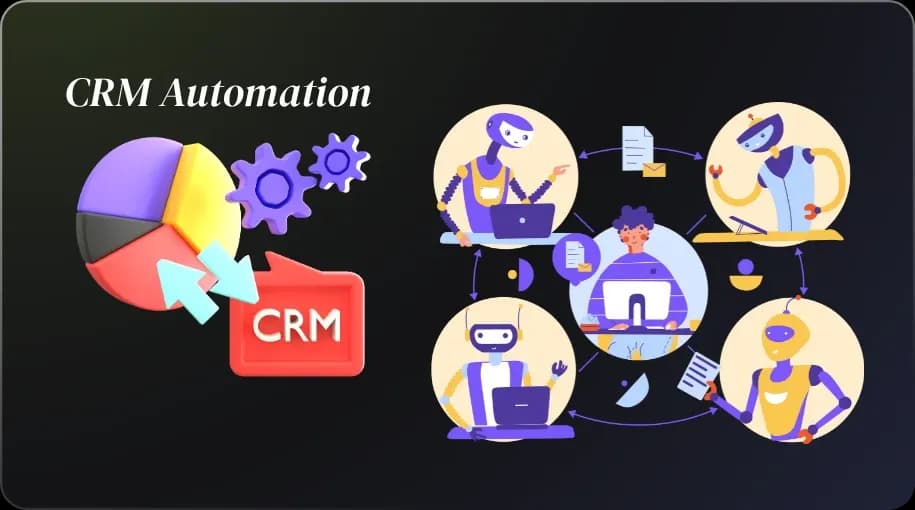

.webp&w=2048&q=75)
As we step into 2025, the ascent of AI machine learning automation marks a pivotal era. This surge intertwines deeply with what AI encompasses, how automation and artificial intelligence revolutionize sectors, understanding the nuances between machine learning and traditional computing power. With generative AI at a crossroads post-ChatGPT's launch over two years ago, there's a mix of anticipation for novel areas like agentic AI and multimodal models alongside an acceptance of its growing pains.
Businesses are on the hunt for tangible outcomes from their generative AI investments amidst regulatory challenges balancing innovation with safety concerns. Despite heightened exploration in this space since 2022, actual integration remains staggered; only a fraction have transitioned projects from pilot phases to full-fledged operational tools. Now let’s focus on exploring AI Machine Learning Automation more closely.
Exploring AI Machine Learning Automation
Exploring AI machine learning automation feels like opening Pandora's box, but with a bit more caution tape this time around. Two years past ChatGPT’s splash into the tech scene, we've all gotten a tad wiser, or maybe just less easily dazzled by shiny new toys in AI. The air is thick with words like 'agentic AI' and 'multimodal models', yet here we are, scratching our heads over why these groundbreaking innovations aren't making their way into everyday business operations as smoothly as expected.
It turns out that moving from a cool pilot project to full-scale production is akin to herding cats for many companies, a task fraught with unseen pitfalls and unexpected costs. The 2025 landscape shows us engaged in this weird dance of excitement mingled with skepticism; it seems everyone's looking for tangible results now before they leap. According to Informa TechTarget’s report last September, though there was an uptick in generative AI usage among organizations, over 90% increased their use, the startling fact remains: only 8% saw their initiatives mature into something substantial.
Autonomous agents could schedule you into disaster due to hallucinations or false outputs from generative tools. Machine learning represents a nuanced advancement towards responsive technology, contrasting sharply with traditional artificial intelligence.

Revolutionizing Industries with AI
Oh, the shift from those pesky prompt-centric models to AI agents ready to leap before we even ask - what a relief! It's like moving from dial-up internet to blazing-fast fiber optic. Gone are the days of spelling out every command; now AI picks up on our habits quickly.
Customer service is becoming swift and accurate due to AI analyzing past interactions. And let’s not forget about creativity, finally, design tools get us without requiring a novel-length list of preferences. But here's where it gets real juicy: HR processes getting an overhaul with zero hand-holding required for tasks like shortlisting candidates or scheduling interviews.
The jury is still out there. And amidst all this techy marvel, industries are throwing side-eyes at integration headaches with legacy systems, imagine trying to fit a square peg into a round hole while wearing blindfolds. Yet despite such hiccups including ROI hesitations that sound eerily similar across boardrooms ("But will it really save money?”), the march towards automation as king continues unfazed.
This evolution tackles the eternal business desire to cut down mundane grunt work. It allows humans more room for innovation and creative problem-solving.
AI and Human Collaboration in 2025
I've spent years hammering out words on a keyboard, and now I'm grappling with the idea of AI as my co-author. It's not just about robots vacuuming floors or managing databases anymore; machines are starting to think, learn, and make decisions that were once in our exclusive domain. According to Reid Hoffman and Greg Beato’s "Superagency: What Could Possibly Go Right with Our AI Future," we're stepping into an era where human creativity isn't replaced but amplified by artificial intelligence.
This leap could be as monumental as when the steam engine revolutionized labor hundreds of years ago, only this time it's our brains getting the boost alongside brawn. Leaders today face a unique challenge that has less to do with technology itself and more about fostering innovation while keeping their businesses competitive amidst rapid change. They must align teams towards embracing AI challenges head-on rather than shying away from them if they wish to avoid obsolescence tomorrow, an intimidating yet thrilling prospect.
Scientific discoveries remind me why writing keeps me engaged after two decades. Witnessing AI reshape tasks and grand concepts feels surreal and worth missing my coffee break.
.webp&w=2048&q=75)
Scaling Businesses through Learning Automation
I've seen it all, or so I thought until learning automation in artificial intelligence started rewriting the rulebook. Take C3IT with Microsoft 365 Copilot, for example; they slashed project documentation time by a charming 30% and cut down on those mind-numbing kick-off presentations prep times by an even more impressive 60%. Then there's Embee rolling out custom plug-ins like they're going out of style, pushing productivity through the roof thanks to Microsoft Copilot Studio.
And don't get me started on HCLTech and their shiny new platform TeamSight - talk about turbocharging engineering processes and KPI tuning with a hefty side order of efficiency from both GitHub Copilot and Microsoft 365. But here’s where things get spicy: Indegene managed to dial back the clock significantly while juggling scientific content writing AND coding without breaking a sweat – courtesy again of our friend, Mr. Oh, but Infosys threw us all a curveball when its developers began churning out better quality code at breakneck speeds because guess who?
Yes, GitHub Copilot stepped into the spotlight once more. Law firms are adopting AI-driven Document Management Systems, thanks to Azure OpenAI Service. This innovation frees up lawyers' time for higher-value tasks.
In swoops TVS Next hooking HR systems up with NexAA for an engagement boost alongside fostering continuous learning culture via, you guessed it, Microsoft's ingenious concoctions leveraging open-source geniuses beneath these tools’ hoods!
Enhancing Decision Making with Artificial Intelligence
As I sit here reflecting on the profound impact artificial intelligence (AI) has had on decision-making in manufacturing, it's hard not to marvel at its efficiency. Gone are the days when factory floors halted unexpectedly due to machinery failures; predictive maintenance guided by AI changed that game entirely. We now see machines telling us when they're tired before throwing a tantrum and breaking down, saving heaps of money and preventing production nightmares.
And let’s talk about quality control - remember human inspectors squinting endlessly at products? Now, AI systems like those Foxconn uses have taken over with their eagle eyes, spotting defects faster than you can blink. It feels almost absurd how these smart factories operate, robotics weaving around humans seamlessly as if performing some high-tech ballet while churning out goods without missing a beat.
But what truly strikes me is how this all circles back to enabling sharper decisions within split seconds; demand forecasting turns companies into mind readers able to predict market waves before they even form fully! Imagine cutting energy costs because an AI system calculated ways your line could sip power instead of guzzling it, we’re talking real bottom-line benefits alongside dancing robots and psychic powers. Rolling out this tech isn't just plug-and-play; data needs grooming for best results.
Cybersecurity becomes akin to guarding Fort Knox against digital heists.

Machine Learning vs. Traditional Computing Power
I have to chuckle a bit when people lump machine learning and traditional computing together as if they're two peas in a pod. Let's get this straight: artificial intelligence, with its fancy capability to mimic human smarts like solving problems or making plans, is already quite the show-off without throwing machine learning into the mix. But here’s where it gets interesting, machine learning takes AI from smart to genius level by letting computers learn on their own without being explicitly programmed for every task.
Imagine teaching your computer how to improve itself just by feeding it data; that’s what we’re talking about here. Yet despite their differences, I've seen firsthand how businesses practically salivate over combining them both. They’ve become the backbone of everything from those creepily accurate Netflix suggestions to cybersecurity defenses that seem straight out of sci-fi novels.
Speaking of which, ever wondered how companies keep up with cyber crooks? Yep, you guessed it - through AI and ML working tirelessly behind the scenes in cybersecurity software detecting threats faster than any human could blink an eye. And let me tell you something else, there's nothing more satisfying than watching these tools reduce 'alert fatigue' among analysts drowning in false alarms thanks mostly due to ML categorizing risks smarter than before.
Automation Redefining Job Markets
Funny how automation is shaping our job markets, isn't it? Just last year, AI-related job postings hit a peak of 16,000 in one month alone. And brace yourselves; positions needing skills in generative AI are on the rise and showing no signs of slowing down, they've quadrupled over two years and might just triple again by next year.
Some people panic about robots stealing jobs. Projections suggest 92 million jobs may vanish, but 170 million new ones will appear.
Now let’s talk roles because they’re not your grandfather’s kind of gigs. We’ve got Generative AI Engineers crafting advanced models like digital Michelangelos and Responsible AI Leads ensuring that our robot overlords play nice.
On the ground level though? Skills gaps are real headaches for employers, with vacancy rates for nerds (affectionately speaking) who can wrangle natural language processing hitting double digits. Yet amidst this scramble for talent lies an undeniable truth: human-machine collaboration isn’t vanishing anytime soon, it's actually redefining workflows left and right!
So as someone deep into deciphering these trends, not my first rodeo, I see clear hurdles ahead yet I'm oddly optimistic about straddling them proficiently with quirky aplomb.
Ethical Considerations in AI Deployment
I've been around the block a few times to see technologies shake up work life. Take AI's role in business, for example. HBS Professor Nien-hê Hsieh points out how it's designed to make our jobs smoother, yet whispers of job displacement are hard to ignore.
Remember when ATMs appeared? Sure, some bank tellers found themselves looking for new gigs, but then banks boomed and so did roles no one thought about before like IT support. The World Economic Forum predicts 85 million old jobs will be gone by 2025 due to AI.
However, 97 million new jobs requiring human skills will emerge. Hsieh mentions something else too, digital amplification through AI can be a double-edged sword. It has a knack for making certain information go viral while leaving others behind, which isn't great for fairness.
Wikipedia shows hope lies within community power correcting course over time, a trick more should catch onto. Bias sneaks into algorithms easier than cats do into open boxes, leading to skewed hiring practices or unequal access. Staying sharp on ethical considerations is crucial as tech evolves to avoid awkward crisis meetings.
Navigating Privacy Concerns in the AI Era
In the AI era, privacy concerns are like that one guest at a party who never got an invite but shows up anyway. Let's be real for a second; with every click, scroll, or double-tap we make online, bits and pieces of us get vacuumed into this ever-hungry beast called artificial intelligence. We're not just talking about your favorite pizza topping here.
This information goes deep, analyzing behaviors, preferences. It even tries to read our minds sometimes. Well throw in the potential for data breaches and suddenly it feels like walking through a digital minefield blindfolded.
Imagine someone using generative AI to whip up a fake profile of you, chilling thought right there! And biases, we haven't even touched on how skewed datasets can mess with fairness in decision-making processes. So here’s my two cents: as smart as these systems are becoming, they've got nothing on human cleverness when it comes to safeguarding personal info (or so I'd hope).
Developers need their eyes wide open - crafting algorithms that prioritize security while wearing ethical hats tighter than usual., ensuring transparency around what gets collected under our noses is crucial too. Oh wait… Are those safeguards enough though? Time will tell if bias filters out from behind screens big and small because let's face it, no algorithm has learned manners yet."
Customizing User Experiences Through Machine Learning
I've always been a bit skeptical about how machine learning is revolutionizing user experiences, but let's face the music - it truly does. Take Spotify's "Discover Weekly," for example. By weaving together natural language processing and some clever filtering, they're making me actually look forward to Mondays just to see what new tunes await in my personalized playlist.
This isn't just making my morning commute more enjoyable; ResearchGate tells us this kind of customization can bump up listening times by a whopping 30%. Then there’s the New York Times with their “Project Feels.” Who thought we’d live in an age where articles get recommended based on our emotional state? Yet here we are, and it’s boosting engagement by 5%.
It makes you wonder if AI knows us better than we know ourselves. Moving over to content creation – hello Grammarly! Saving editors from endless hours of proofreading and probably sparing them quite a few headaches along the way too.
The leap from manually editing client stories to letting Grammarly take the reins has slashed editing time significantly according to Frost and Sullivan case studies. And marketing hasn’t escaped AI’s touch either; imagine automating ad placements so accurately that ROI shoots through the roof because your ads find their perfect audience without breaking a sweat or budget.
The Future of Healthcare with Automated Diagnosis
Ah, automated diagnosis in healthcare, where machines decide if that headache is just stress or something more sinister. Imagine telling a computer your symptoms and it churns out a diagnosis faster than you can spell "hypochondriac." AI now analyzes vast data pools to pinpoint diseases with precision that surprises seasoned doctors. But here's the catch - this all hinges on clean, complete data.
As Ken Abrams from Deloitte points out, without accurate input, these high-tech marvels could lead us astray just as easily as they find our path to wellness. So we're not just teaching computers to diagnose; we're schooling them in medical detective work of Sherlock Holmes caliber – minus the deerstalker hat and pipe of course. And let's be honest: there's something both comforting and terrifying about entrusting our health to algorithms perfected by entities like Deloitte’s army of tech wizards.
They assure us it’s safe but sometimes I wonder if my smartphone will know too much about my well-being one day.
Education Transformed by Intelligent Tutoring Systems
I've spent a good chunk of my career writing about tech, but let's talk intelligent tutoring systems. You know, the type that decides to make education as personalized as shopping on Amazon. It turns out these AI-powered geniuses are making teachers' lives easier by slashing grading time by 70%.
Yes, you read that right. Suddenly, educators have more hours in the day for actual teaching because they're not buried under mountains of paper anymore. Then there's student engagement, skyrocketing thanks to our digital pals, with over half of educational institutions noticing an uptick.
Imagine chatbots nailing custom assistance with a success rate fit for Vegas at 91% accuracy; it’s like having a private tutor without the hefty price tag or scheduling nightmares. But here’s where I raise an eyebrow: we’re diving headlong into this crazy world where $5 billion is being thrown at AI in classrooms and expecting everything to just work out? The thing bolsters learning no doubt, adaptive software ushering test scores up by who knows how much next year, but what happens when technology doesn't just assist but starts leading the way?
Here’s me hoping those in charge keep tabs on keeping things balanced between innovative coolness and solid human touch.
Oh, the future's bright, or so they say, with AI machine learning automation taking center stage by 2025. Picture this: machines learning from data like pro chefs tasting their concoctions, tweaking here and there until perfection. Businesses will see efficiency skyrocket as these digital wizards handle tasks with eerie precision.
Sure, some will vanish into the AI abyss, but others will emerge for those who know how to steer this tech beast. So strap in; it's not just a wave, it’s a tsunami of change barreling toward us.
Ready or not, here AI comes!
%2520(1).webp&w=2048&q=75)